
The Little Known Evolutionary Mating Bias That Subconsciously Influences People (Your Unfair Advantage)

Many entrepreneurs have a false misconception that if they have a good offer, competitive pricing & drive“traffic” to their site, that is enough to run a successful business.
Unfortunately, in 2026, that’s not the case.
I speak to business owners & successful entrepreneurs daily. Over the last 12 months, I have audited hundreds of businesses, websites & ad accounts.
The majority of business owners or C-suite executives say their business is underperforming and they can’t pinpoint the reason why. On paper, everything is good, but they still struggle to generate demand & drive revenue growth.
I’ve come to realise 2 things:
- There is a massive deficit in comprehension when it comes to what makes people buy and take action
- There is little to no insight into how digital marketing works and how sales cycles actually play out
The businesses I speak with aren’t clueless. They have the primary boxes marked:
- Strong offer
- Competitive price
- Tons of traffic to their website
The thing is, the 3 items listed above have become prerequisites. They aren’t a defining value proposition or something that you can leverage in today's sophisticated market.
What if I told you that there was something subconsciously blocking your prospects from even considering your offer? What if your prospects were put off by your business, but they can't understand or explain the reasons why?
It's intuitive, subconscious and deeply embedded into instinct.

Note
Due to global pandemics, geopolitics, tariffs & interest rate hikes. Consumer psychology has shifted.
To completely comprehend buyer psychology, we need to understand and unpack 2 points
- Why the competitive landscape across every industry is HIGHLY saturated & how that impacts your sales cycle
- How macroeconomic factors, wars, and rising interest rates have created fear & uncertainty (lowered consumer confidence)
1. The barrier to entry is non-existent. This has created a lot of noise and a ton of scepticism (Market sophistication)
Competition across every industry is through the roof. The reason why is that the barrier to entry has been completely removed. Technology has advanced to the point where information and software have become a commodity.
Anyone with Claude, a new Canva template and a Squarespace subscription can quickly "start up" a company.
With a little sprinkle of Meta ads, that business is quickly seen by over 10,000 people within days, not weeks or years.
And just like that, you have another competitor screaming at your audience, “buy my sh*t”
Your potential clients and prospects are constantly bombarded with “the best offer” to the point that they have become desensitised and cautious.
2. Macroeconomic factors influence your cost of acquisition & elongate your sales cycle (Consumer confidence is at an all-time low)

Global wars, rising interest rates and fear-mongering from mass media outlets have a massive impact on your prospects' mental well-being.
Furthermore, a point that’s rarely discussed is that these factors influence your prospect's buying behaviour.
I want you to think about your average person.
- They’re in debt out of their mind with the big banks
- Chasing a dream that was handed down to them by Hallmark
- They work a job that doesn’t stimulate them to keep the "dream" alive
- Their food, water & clothes are laced with all sorts of forever chemicals
- They’re overworked, constantly sick & don’t know how to switch off at night
So you have that cocktail going on day to day, and then you add the fact that they watch mainstream media outlets reminding them of all the wonderful things that are going on around them.
Your prospect is living in perpetual stress, fear & uncertainty.
When you factor in the highly saturated dynamic that I discussed in my first point, you can start to see how many obstacles you have to overcome.
Consumer confidence is at an all-time low. It’s taken me 500 words to get to this point, but if you’re reading this, you’re running a business, and you clearly want to get ahead. To do so, you need to realise that everything is connected.
I’d go one step further and say that everything is hyper-connected.
For example, Interest rates rise
- Disposable incomes evaporate
- AI takes people's jobs in lucrative positions
- Less money circulating around in the economy
- Fear-mongering from the media creates doubt over safety
- Consumer confidence lowers & people become highly sceptical
When consumer sentiment shifts & people become more selective, they default to trust. And trust, as I'm about to show you, is not built through a better offer or a lower price. It's built through a mechanism that operates below conscious awareness.
Note
I’m not saying that competitive pricing and an enticing offer aren’t important. They are vital. BUT they are prerequisites if you want to play the game.
They are NOT a mechanism or lever you can pull to leverage trust.
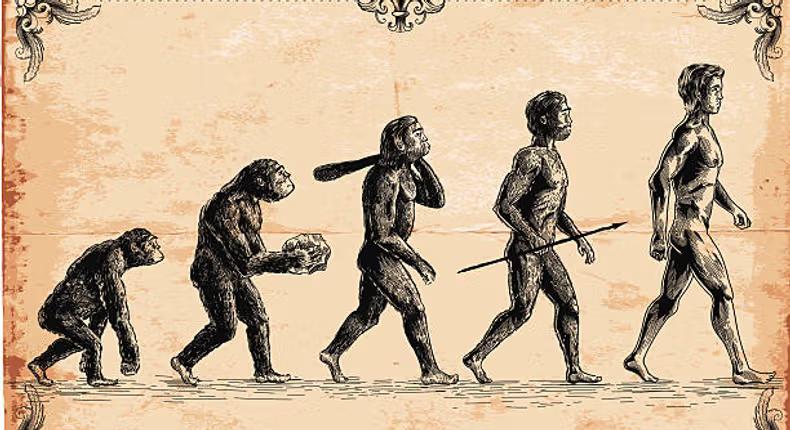
Decision-making has not changed in over 300,000+ years
Humans didn’t evolve to browse websites or scroll on their phone.
We evolved to reproduce and survive.
The same neurological mechanism that kept your ancestors alive is the one your prospects are using when they land on your website, look at your brand or scroll past your ad.
Very few are aware of this, but your prospects are assessing your business instinctively. Before they even consider your offer.
People make purchase decisions based on emotion, and then they use logic and reason to justify that emotional decision. The thing is, your prospects are not aware that this is happening; this is instinctual.
This isn’t a metaphor; this is neuroscience. It’s an evolutionary mating bias called the halo effect.
What is the halo effect? (A subconscious heuristic that influences judgement)

In 1920 a psychologist Edward Thorndike noticed something that intrigued him. When people formed a single positive impression of someone, that impression “carried over” into how they judged everything else about that person.
For instance, if someone was more attractive, they were assumed to be more intelligent, competent and trustworthy.
A misconception around the halo effect is that it’s only a cognitive shortcut.
But it goes much deeper than that.
The halo effect is a biological heuristic. It originates from the same preconscious wiring that scans a face for health, structural integrity & genetic wellbeing.

What does 'heuristic' actually mean?
Heuristic is intuition or a rule of thumb. You can think of like a shortcut for decision-making or problem solving.
Note
Humans are animals hard-wired to find the healthiest mate. This evolutionary bias is embedded in us, and it’s a process that everything goes through on a subconscious level.
This same scan is running all the time, when your prospects see your content, your website, your ad, your logo. It’s always there; you can’t bypass it.
I’m not speculating either. There was research conducted on websites.
According to a study from 2006, researchers Lindgaard, Fernandes, Dudek & Brown published a paper titled "Attention Web Designers: You Have 50 Milliseconds to Make a Good First Impression.”
In the study, participants were shown web pages for exactly 50 milliseconds and asked to rate their aesthetic appeal.
The ratings stabilised within that single exposure. Within 50 milliseconds, the brain had already decided whether the page was attractive or not, and the judgement didn’t change with more time.
The study confirmed what Thorndike had concluded 86 years earlier but with the additional layer of time.
Before a headline is read, judgments are made based on the visual cues your brand transmits.
These visual signals are influenced by:
- Your brand's visual aesthetic (logo, typography, wordmark)
- The look and feel of your website or landing page
- The quality of the images & videos
These assessments are made subconsciously
- Is this premium or cheap?
- Is this professional or amateur?
- Is this trustworthy or suspicious?
A strong positive halo will influence these assessments, but they will also have cascading effects. Your headline & message will hit harder & your offer will have more weight & credibility.
When you don’t utilise the halo, you are starting on the wrong foot. This means you’re having to fight an uphill battle.
You can’t negotiate or persuade your way out of this; it’s an internal subconscious perception & it impacts everything that comes after.
Here’s the “secret” to marketing that you won’t find anywhere else online.
It doesn’t matter what you say or do. It’s how you make your prospects feel. That’s what dictates action. That’s what brand is; that’s what persuasion is. That’s what determines whether you have a business in abundance or one that elevates your cortisol.
The halo effect doesn't just change what people think about you. It changes what they actually experience
In 2008, behavioural economist Dan Ariely and his colleagues ran a study published in JAMA. Participants were given a mild electric shock, then a pain pill. Half were told it cost $2.50. The other half were told the exact same pill had been discounted to ten cents.
The full-price group reported significantly more relief.
Perception has a profound impact and influence on decisions & lived experiences.
Why is the halo effect important if you want to cut through the noise and run a stress-free business
Have you ever heard of a term called the supply shock paradox?
As the barrier to entry drops, information becomes a commodity, output becomes abundant & quality outcomes become scarce.
When everyone has access to the same tools, generic becomes the new normal.
- Templated websites
- AI-generated copy
- AI-generated images & brand kits
If everyone is using AI to create the same output, what’s the differentiator?
The supply shock paradox isn’t the only thing at play.

The chameleon effect
Chartrand and Bargh (1999) found that humans unconsciously mimic the behaviours, body language, and lifestyle displays of those around them.
It evolved to signal belonging.
There’s a ton of hype around AI online. It’s common to see posts like “This one prompt killed my whole SEO department” or “I replaced my human resources team with Claude”. This is pulling more and more people into the slop, which is making them more and more docile & generic.
This is why a strong halo is not a nice-to-have. This is how you differentiate.
The halo effect has 4 key benefits:
- You build trust & preference subconsciously in the blink of an eye
- You stand out from a sea of noise & AI slop
- You can charge more for your service
- You bypass comparisons
One flaw outweighs several strengths
Psychologist Roy Baumeister spent years studying why negative information tends to dominate positive information across nearly every domain of human judgment. His 2001 paper, titled plainly "Bad Is Stronger Than Good," found the same pattern everywhere he looked.
1 negative flaw cancels out 3 positive strengths
Here’s how that works when it comes to your online presence & acquisition strategy.
A prospect can love your logo, your colours, your copy and your case studies. But there’s something off-putting:
- The padding, margin and look of your website
- Photos on your website are stock or worse, AI-generated
- Your messaging is weak & doesn’t speak to their core desire
Those negative signals outweigh any positive ones.
For instance, if your offer is strong but you're guilty of the 3 things listed above. Your likelihood of converting will be a lot lower.
Your prospects aren’t grading your website and presence on average. These are hard-wired instincts that have been embedded for 300,000+ years.
One negative, and the whole positive impression gets met with anxiety & doubt.
This is why "good enough" is actually garbage.

A chain is only as strong as its weakest link.
How to utilise the halo so you can lower your acquisition costs, erode scepticism & cement trust (A state-of-the-art approach)
The majority of businesses treat brand & website like decorations. They get the cheapest freelancer to “knock something up” because “running ads” is far more important.
Similarly, they will put off getting content or documenting their work. When they do, they’ll allocate a pittance towards showcasing their finished projects.
Entrepreneurs & leadership in C-suite are hyper-fixated on returns. Ironically, by overlooking the halo, & seeing these foundations as a cost instead of an investment, they lower their standing in the market.
More importantly, they lower the perception in their prospects' eyes and stir up negative emotions of fear, uncertainty & doubt.
There are so few companies utilising the halo effect that the ones that do completely stand out because the perception in the prospect's eyes is subconsciously swayed by evolutionary psychology.
Your visual identity is not decoration. It's a unique mechanism.
Here’s how we utilise it at Mesmerise:
1. Premium digital real estate, brand ID & visual content
Before a prospect ever sees an ad or reads a piece of content, they land on a website or see a logomark that passes the subconscious analysis.
The design signals safety, competence, and exceptional delivery. The halo effect has to fire because everything that follows lands harder.
2. Build commercial assets that compound
Your landing pages, educational articles, images & videos are digital infrastructure. You have to treat it like an investment, a vehicle for growth. Using stock images to save a few grand will cost you a lot more in the long run.
Skimping on commercial assets lowers your standing in the market & you’ll be perceived as a cheap commodity.
3. Create a category of one (By educating your audience on their pain point & your unique solution)
This is a BIG one. Very few businesses do this effectively if at all. This is how you build a moat around your brand & separate yourself from your competitors.
By educating your audience on their pain points, they will naturally assume you can solve their problems.
This also allows you to open up market share. I'll do a seperate post on this topic because it's critical to long-term stability.
4. Omnipresence
There’s a second subconscious psychological mechanism we utilise.
Psychologists call it the mere-exposure effect: repeated exposure builds deep, subconscious preference, provided the first exposure wasn't a strike against you. Nobody consciously decides to trust a brand more because they've seen it five times. They just do it because it creates familiarity.
He charges more than 90% of people in his industry (Completely booked out and starting another business)
TPPT Banner Montage
Tom Peacock is a personal trainer in Melbourne. When he came to Mesmerise, he had no website, no content, no branding, no strategy. He was great at what he did and knew where he wanted to go, but he didn't have a vehicle to get there.
His instinct was just to get something up and start running ads. But just running ads doesn't lead to clients. You need an ecosystem that builds trust, erodes fear, and uncertainty.
We built a brand identity anchored in the halo effect. A premium website. An entry-level offer for cold traffic. Thought leadership articles that educated the audience on their current pain point. Online and in-person offer bundles. Google and Meta running in tandem.
He raised his prices within three months and is waking up at 5 am to fit everyone in.
His girlfriend now helps him with admin; he's about to raise prices again & we’re building out a website and infrastructure for their second business.

Click here to explore the ecosystem we built for Tom
Summary
In short, you need to be utilising the halo effect. It’s such an effective way to differentiate because the majority will buy into AI slop or outsource their brand & website to cheap designers overseas.
When you skimp on your presence, you commoditise & blend in with all the other businesses chasing their tail, competing on price, shouting “buy my sh*t”.
The halo effect is powerful, but it won't help if you don't have your foundations set in stone.
What order of importance is the halo effect in terms of business and acquisition?
7 foundational business principles ranked highest priority to lowest
- Exceptional product or service
- Defined unit economics
- Strong offer
- Halo effect
- Attribution tracking
- Acquisition strategy
- Follow-up and nurture
Once you have the core 4 sorted, that’s when you go into attribution and acquisition. Most business owners have only 1 or 2 of these in place.
At Mesmerise, we focus on and help our client partners with all 7.
When I was on a call last year I was going through all this with a prospect, and he said to me “You guys aren’t like a traditional marketing agency; you’re like growth architects”.
The reason why is because we reverse-engineer how to drive revenue. We don’t care about organic traffic; we don’t care about awards. We obsess over your target audience.
Key takeaways
If you’re this far down, you’ve absorbed a lot of information.
Here are the main points covered:
- Your prospects are not making rational decisions
- Strong offer, competitive price and traffic are prerequisites
- The barrier to entry is non existent & saturation is through the roof
- AI making output abundant but outcomes scarce
- Consumer confidence is at an all time low due to wars, interest rate hikes & fear mongering from mainstream media
- You have to build trust & think long term
- Line up with evolutionary psychology & utilise the halo
- One negative flaw outweighs multiple positive strengths. Avoid the horn
- Build commercial assets like your website & landing page
- Successful entrepreneurs living in abundance don’t tread their brand, website & acquisition like a line item, they view it as a compounding asset class. An investment
- Educate your audience if you want to create a safe, reliable business
- Partner with a growth architect to make your life easier
Your prospects are making emotional decisions on a subconscious level.
Utilise the halo effect and build a moat using 300,000+ years of evolutionary psychology.
Frequently Asked Questions
Founder of Mesmerise, a state of the art full service marketing agency.
We don't just run ads... we build trust and turn strangers into loyal customers.
Attention is fleeting, trust is not...